
Shattered
Built From The Ground Up

The Making Of Shattered
Shattered began as a self-funded project created and directed by Kathie Melocco — her first documentary project after picking up a camera — not as an established filmmaker, but as a former injured worker seeking to document the human experience unfolding inside Australia’s workers’ compensation system.
Initial funding arose from an outcome connected to Kathie’s own case. It provided the foundation to begin the project independently, including the acquisition of core camera and field equipment, and to centre lived realities that were largely absent from public discussion.
As the work progressed, it became increasingly clear that many of the pressures being experienced were unfolding within a system undergoing significant technological transition.
What began as personal inquiry evolved into a developing documentary practice. Kathie undertook formal training, attended documentary intensives, industry forums and conferences, and progressively integrated filmmaking into her broader work — bringing together her background in behaviour change, systems analysis, and strategic communications.
Shattered is her first feature documentary. The film was developed during an intensive period of learning and practice, as Kathie continued to build her documentary craft while also adapting to a significant hearing impairment requiring bilateral hearing aids.
Over more than three years of following this story, a quieter pattern began to emerge: people across the system — in different ways — were carrying harm.
Building The Film
Filming commenced in earnest in September 2023. Working largely independently, Kathie committed extensive unpaid hours to research, field filming, and documentation as events unfolded in real time.
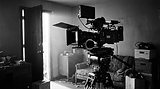
The film is captured in 4K using Sony cinema bodies and Sigma Art primes (25–70mm and 70–200mm), with aerial coverage filmed by drone, meeting contemporary streamer delivery standards.
As the investigation widened, the project expanded beyond its original scope. Emerging material pointed not only to individual experiences, but to broader questions about how complex institutional systems manage psychological injury, risk, and recovery over time.
What began as a gender-focused inquiry evolved into a wider examination of system design, lived experience, and the unintended human consequences that can arise when administrative efficiency and human need fall out of alignment.


On The Ground
In this project, the story moved beyond meeting rooms, inquiry transcripts, and policy reports.
Kathie travelled across Australia — camera in hand — speaking directly with families, GPs, psychologists, lawyers, employers, injured workers, and communities navigating the system in real time.
The aim was not advocacy, but documentation.
What emerged was a complex picture: a system under pressure, experienced very differently depending on where one sits within it.
Across interviews and locations, however, a consistent theme surfaced — the human experience of navigating the system is not yet fully understood, particularly in how it shapes everyday family life over time.
Shattered was created in response to a simple observation: meaningful reform is difficult when lived experience remains fragmented, unheard, or insufficiently recognised across the system.
Contributions & Production Phase
From approximately June 2024 to June 2025, Ballina Gee, an injured worker with an interest in documentary filmmaking, contributed time on a voluntary basis. Her involvement included early development-phase filming while building her own documentary skills, alongside contributing lived-experience insight. Her contribution is acknowledged with sincere appreciation, alongside other voluntary contributors.
In 2025, targeted professional support was engaged to complete key production elements and undertake necessary reshoots in the interests of accuracy and clarity.
Like many independent documentaries, Shattered moved through multiple phases of research, filming, pausing, reshaping, and reflection — shaped by trauma exposure, funding constraints, and a rapidly shifting policy environment.
As production continued, the financial realities of independent filmmaking became increasingly apparent. Additional capital was required simply to complete the work.
To support continued filming, a small separate training film on moral injury was briefly developed in late 2024. The project was distinct from Shattered in both content and purpose.
When elements of that project later appeared within an official transcript process, it became clear that its intended audience and purpose had been materially compromised. The initiative was subsequently discontinued.


Independence, Completion, and Release
Despite significant obstacles, the documentary continued forward with clarity and independence. Creative direction and final editorial decisions remained guided by the director’s vision.
A rough-cut pre-screening held in September 2024 tested narrative clarity and audience comprehension.
Audience insights informed targeted additional filming and editorial refinement to strengthen the final work.
Shattered explores a complex subject. At its heart, however, this is a story about families — about what happens when someone you love leaves home for work, as millions do each day, and finds themselves injured while simply trying to earn a living.
Many enter the workforce with trust: trust that if something goes wrong, care will be there. Trust that systems built over generations will respond with clarity and support. Yet for some families, the journey that follows becomes unexpectedly complex.
What begins as a deeply human relationship between patient and doctor can expand into a dense administrative landscape shaped by a system conceived more than a century ago and layered over decades with multiple, sometimes competing, decision-makers.
In this environment, care can become difficult to navigate. Communication can fragment. Families can find themselves carrying uncertainty at precisely the moment they are most vulnerable.
It is within this space — where love, injury, and system complexity intersect — that families often describe the experience as deeply distressing.
The process of bringing this story to screen was demanding and, at times, deeply confronting.
Maintaining independence allowed the work to be approached with careful verification and close attention to the source material. During this process, the review of the now well-known 21 boxes within the Parliamentary Reading Room underscored a more complex reality: reform processes do not always appear the same when viewed from inside the evidentiary record.
Principal cinematography concluded in late 2025. A limited advance cinema screening is scheduled for 2026, with the film positioned for the festival circuit and subsequent documentary streamer platform release.
Kathie remains deeply grateful to everyone who contributed their voice, expertise, and lived experience along the way.
What Comes Next
Shattered marks the beginning of a broader body of work.
Kathie is now intentionally using filmmaking as one of several tools to explore how complex systems affect the people inside them — and how clarity, dignity, and capacity can be strengthened over time.
Following an extended period immersed in workers’ compensation, the completion of Shattered brings this chapter of work to a close.
The next phase turns toward a quieter subject, but an equally important inquiry: how contemporary societies understand grief, loss, and end-of-life care.
This work is currently being developed through a new documentary project.
A Final Note
Shattered is a reflection on what can occur when complex public systems and human vulnerability intersect under pressure.
In time, the footage will be gifted to the National Film and Sound Archive as part of the historical record of Australia’s workers’ compensation system.
