

When Workplace Injury Changes a Family
Recovery Is Rarely A Solo Journey
Every year, more Australians are injured at work than on our roads.
Yet we rarely talk about what happens to families after a workplace injury.
Partners, children, parents and friends often carry the consequences alongside them as relationships, finances, roles and future plans begin to change.
Throughout Shattered, families emerged as a recurring theme. What also emerged was something less often discussed: grief.
Not only the grief that follows death, but the grief that can accompany the loss of health, livelihood, identity, certainty and the future people once imagined for themselves and those they love.
Recent changes to workers' compensation laws mean that some questions are only beginning to emerge. What happens when a family's lived experience and the outcome of a system no longer align?
The injury may have occurred in a workplace. The claim may eventually close. But the consequences are often lived within families long after the paperwork ends.

The most important support people receive after injury is often not found within a system.
It is found in partners, parents, children, friends and communities who continue to stand beside them when life no longer unfolds as expected.
Throughout Shattered, stories of injury became stories of love, loss, resilience and care.
Again and again, families reminded us that recovery is rarely a journey anyone makes alone.


We have followed Tina's story for the past six years. Living on the opposite side of the country from her family, Tina navigated much of the workers' compensation system alone, without the day-to-day support of loved ones. She speaks of the isolation she experienced and the impact it had on her wellbeing, which ultimately led to her being taken to emergency.
What Families Told Us
Throughout Shattered, families described how a workplace injury can affect far more than a person's health.
Relationships change. Financial pressures emerge. Future plans are disrupted. Everyday routines that once felt ordinary can suddenly become difficult.
For many families, recovery becomes a shared journey.
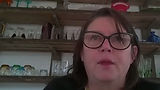
We have followed Glenda's story for many years. Although her claim has now been settled, the consequences remain. After years of seeking help, making complaints, and being passed from one process to another, the toll became impossible to ignore. Her daughters were still in high school when this began. The strain on the family was so great they chose to live with their father.
This is not simply a story about a claim. It is a story about what prolonged isolation, uncertainty and feeling unheard can do to a person — and to the families who live through it alongside them.

The Hidden Impact of Injury
Workplace injury is often measured through claims, assessments and medical reports.
Yet many of the most significant impacts occur beyond formal systems.
Partners may become carers. Children may take on new responsibilities. Friends and extended family often step forward to provide practical and emotional support during periods of uncertainty.
These experiences are rarely visible, yet they can shape the course of recovery for years to come.

After their family GP advised that her husband was not well enough to make a workers' compensation claim, Family Advocate Sarah O'Brien says her family faced difficult decisions about how to access the care and treatment he needed.
Looking back, Sarah says that if she knew then what she knows now, they would have sold their home to fund his care and treatment rather than endure the workers' compensation process.

For more than 30 years, Rosemary McKenzie-Ferguson has honoured her brother's memory by standing alongside injured workers and their families, offering practical support, guidance and care during some of the most difficult periods of their lives.
Long before lived experience and peer support became recognised concepts, Rosemary was doing this work. In many ways, she helped pioneer the role of support person within the workers' compensation system — a role that remains largely unrecognised despite its importance.
Grief, Loss and Adaptation
Despite the headlines, workers' compensation is ultimately about people and deserves the same care and attention as other social issues.
Workplace injury can have a profound impact on families. For some, although the claim eventually ends, the consequences remain.
Relationships have changed, some fractured. Careers have been interrupted. Financial security has been lost. Years have passed.
Some are able to rebuild their lives. Some never fully recover. Some families are fractured permanently.
The effects often ripple through partners and children, reshaping relationships and futures, yet support for those living alongside injury is rarely recognised.
Understanding this dimension of injury may be one of the least explored — and most important — conversations in recovery.

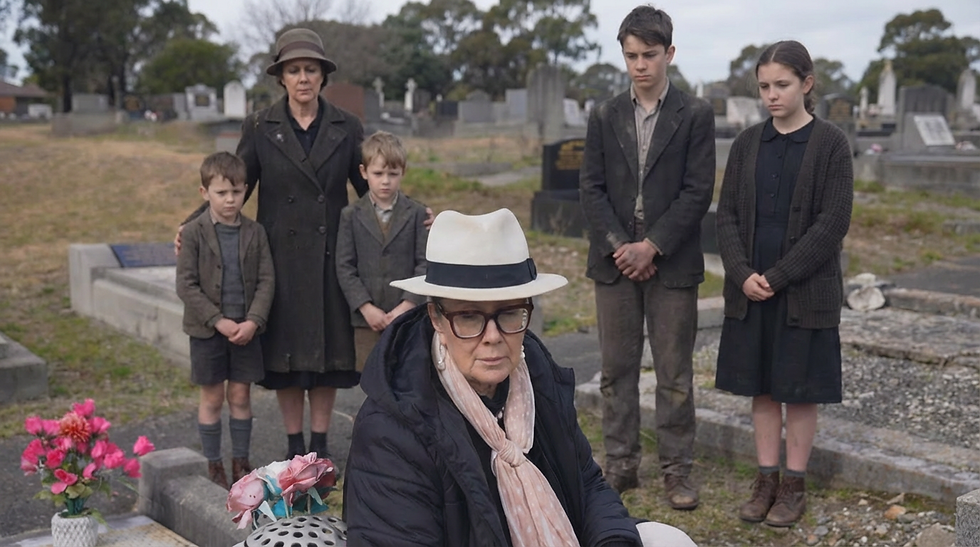
More than 120 years after the Mount Kembla Mine Disaster, families and community members continue to gather at Windy Gully Cemetery to remember those who were lost. Their presence is a reminder that behind every workplace tragedy are families, communities and generations who carry its legacy. Photographs courtesy of Kareena Markham and the Office of Minister Ryan Park MP. Used with permission.
A Legacy Carried Through Generations
As part of filming Shattered, we travelled to Mt Kembla, a historic mining village in the Illawarra region near Wollongong, where descendants gather each year to remember those lost in Australia's largest industrial disaster.
On 31 July 1902, an explosion tore through the Mount Kembla Colliery, claiming the lives of 96 men and boys. The disaster left 33 widows and 120 children without fathers and sent shockwaves throughout Australia and beyond. At the time, there was no modern workers' compensation system. Families relied largely on community fundraising, charitable appeals and public donations.
The Mount Kembla Mine Disaster prompted a Royal Commission and became a defining moment in Australia's industrial history. More than 120 years later, descendants and members of the community continue to gather at Windy Gully Cemetery to remember those who were lost.
In 2025, the Mount Kembla Mine Disaster Site was added to the NSW State Heritage Register. Today, the area has become a place of quiet reflection. Memorials, open spaces and the surrounding landscape encourage visitors to pause, remember and consider the human cost of work.
Their presence is a reminder that workplace tragedy does not end when the headlines fade. Its effects can be carried through families, communities and generations.
The question raised by Mount Kembla in 1902 remains with us today: what do we owe those whose lives are changed forever by work?
It is a question that sits at the heart of Shattered.
The Consequences That Remain
For some families, the consequences were measured not in weeks or months, but in years.
Workplace injuries are often treated as individual events. Yet throughout Shattered we encountered families whose lives had been altered for decades by circumstances they neither caused nor controlled.
Long after a claim closes, families remain. Living with what was lost. Adapting to what changed. Carrying consequences that can endure across generations.

A Question Worth Asking?
When a workplace injury occurs, we understandably focus on the injured worker.
But what if we paid more attention to the people standing beside them?
Throughout Shattered, families emerged as one of the least visible yet most important parts of the recovery journey. Partners, children, parents and friends often carry the consequences of injury long after the initial event has passed.
If connection, belonging and care help people rebuild their lives, perhaps supporting families is not an optional extra.