
Latrobe Valley:
Shaped by Grief and Loss
Decades of harm. A long-awaited apology. A community determined that those lives will not be forgotten.
In 2008, the Victorian Government formally apologised to former State Electricity Commission workers and their families for the suffering caused by asbestos exposure—acknowledging an injury that had been “ignored for too long.”
The apology came after generations of workers and families had carried the consequences of a danger known about for decades. People became seriously ill. Lives were lost. The harm extended beyond the power stations, affecting families and the wider Latrobe Valley community.
Today, the Asbestos Council of Victoria/GARDS is raising funds for a permanent memorial proposed for the Moe Botanical Gardens—a place where families can gather, lives can be remembered and this history can be publicly recognised.
The Latrobe Valley story is not only about asbestos. It is a warning about what can happen when evidence of harm is known, but meaningful action comes too slowly.
In Doctor Doctor, retired forensic psychiatrist Dr Julian Parmegiani draws a confronting comparison with asbestos. Psychological injury and asbestos-related disease are not medically equivalent. The comparison concerns how institutions respond when credible warnings of harm accumulate.
Australia’s devastating asbestos history demonstrates the cost of delayed recognition. The warning for psychosocial safety is that repeated accounts of harm must be treated as information requiring attention—not as noise to be managed.


The cost of the asbestos crisis
For much of the twentieth century, the Latrobe Valley powered Victoria.
Generations of workers built, operated and maintained the great power stations of Yallourn, Morwell, Hazelwood and Loy Yang. The State Electricity Commission provided secure employment, built towns and helped shape a strong community identity around hard work, technical skill and public service.
But woven through that proud industrial history is another story.
It is the story of asbestos—and a deadly legacy carried by workers from the power stations into their homes, families and futures.
The dust inside the powerhouse
Asbestos was used extensively throughout the Valley’s power stations. It insulated boilers, turbines, steam pipes and other equipment exposed to extreme heat.
Laggers mixed dry asbestos with water to create a paste. Maintenance workers cut through old insulation and removed damaged material. In some areas, the air became so thick with dust that workers could barely see from one end of a boiler room to the other.
Workers have recalled asbestos settling on their clothing, tools and even their coffee cups.
For years, many were given little or no meaningful warning about the danger. Protective equipment was inadequate or absent.
What appeared to be ordinary industrial dust could remain inside the body for decades before causing serious or fatal disease.


Exposure beyond the workplace
The asbestos did not always remain behind the power station gates.
Workers returned home with fibres embedded in their hair, boots and clothing. Wives and mothers shook out and washed dust-covered work clothes, unaware that this ordinary act of family care could expose them to the same danger.
Children played near industrial waste sites and among discarded asbestos lagging. Some remembered its soft, snow-like appearance and throwing pieces at one another.
The exposure travelled from the workplace into kitchens, laundries, backyards and family homes.
This is why the Latrobe Valley’s asbestos story cannot be understood only as an occupational health crisis. It became a community tragedy.
A legacy measured across generations
It is estimated that approximately 140,000 Latrobe Valley power industry workers were exposed to asbestos between the 1920s and the 1980s.
Research has found exceptionally high rates of mesothelioma among former power industry workers in the region—reported at up to seven times the state or national average, depending on the study cited.
Asbestos exposure is associated with mesothelioma, lung cancer, asbestosis and other serious pleural diseases. Because these illnesses can take decades to appear, the consequences have continued long after the original exposure ended.
For many families, retirement did not bring the future they had expected. Instead, it brought breathlessness, medical appointments, caregiving and grief.
The power stations generated electricity for millions of people. The human cost was borne much closer to home.


What was known—and when?
The health dangers associated with asbestos had been recognised internationally for many decades.
According to the Asbestos Council of Victoria/GARDS, the State Electricity Commission was informed about the dangers of asbestos dust in its power stations during the 1940s and 1950s. Yet workers continued to experience heavy exposure without adequate warnings or protection.
That knowledge matters.
It asks us to consider not only the harm caused by a hazardous material, but what institutions owe workers when evidence of danger emerges. How quickly must they act? Who is responsible for ensuring workers understand the risk? What happens when economic progress is valued more highly than human health?
These questions are not confined to the past.
An apology for suffering ignored too long
On 15 October 2008, then Victorian premier John Brumby apologised to former State Electricity Commission workers and their families for the pain and suffering caused by asbestos exposure.
The apology acknowledged an injury that, in his words, had been ignored for too long.
Recognition matters. So does an apology.
But neither can return the people who died, restore lost years or remove the uncertainty carried by those who know they were exposed.
For families living with asbestos disease, the legacy is not historical. It is personal, medical and continuing.


Care created by the community
In the face of that legacy, the community built its own forms of care.
The Asbestos Council of Victoria/GARDS has supported people affected by asbestos and silica-related disease since 1991. Its work has included advocacy, education, practical support and companionship for workers and families navigating serious illness.
The organisation also helped secure a Victorian government apology and campaigned for improved local cancer services.
This is another part of the Latrobe Valley story: when formal systems did not provide everything families needed, members of the community stepped forward for one another.
Grief became advocacy. Loss became service. Memory became a determination to protect others.
A place to remember
Despite the scale of the loss, the Latrobe Valley still has no completed public memorial dedicated to those whose lives were taken or changed by asbestos-related disease.
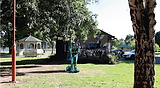
ACV/GARDS is raising funds for a memorial sculpture and mural proposed for the Moe Botanic Gardens.
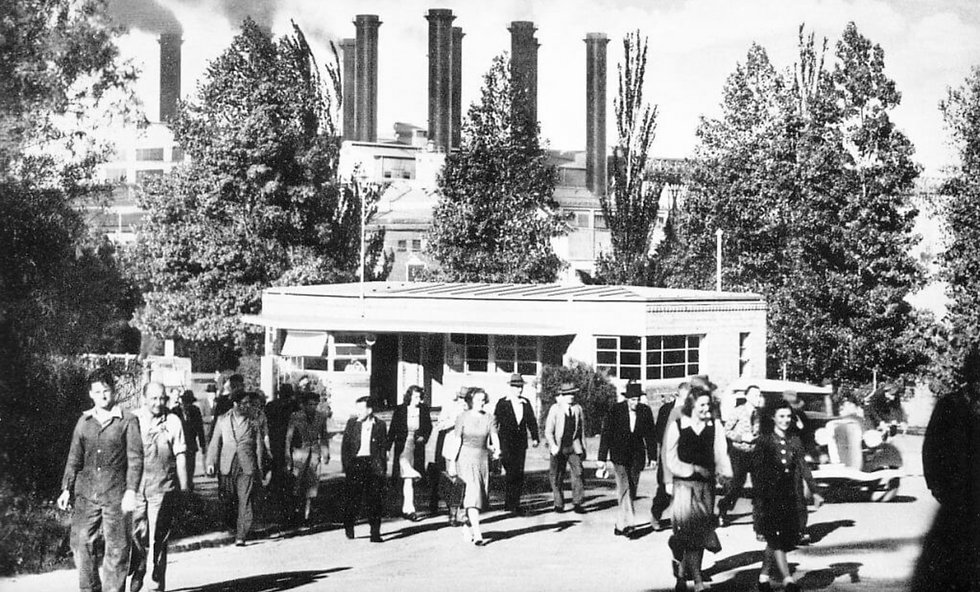
The sculpture depicts a power station worker with his young daughter—recognising that asbestos disease did not affect workers alone. Behind them, a mural will show workers leaving the Valley’s power stations.
It is a simple but powerful image: a worker leaving the job and returning to his family, carrying home a danger none of them could see.
For more than 25 years, the organisation has sought a permanent place where families can gather, remember and have their loss publicly recognised.


More than an industrial history
The Latrobe Valley helped build modern Victoria.
Its workers generated power, sustained industries and supported towns shaped by shared effort and pride. That contribution deserves recognition.
So does its cost.
The asbestos crisis reminds us that workplace injury does not end at the workplace boundary. It enters homes, reshapes relationships and leaves families and communities carrying consequences long after the machinery falls silent.
A memorial cannot undo that harm. But it can say clearly that these lives mattered, these families carried an enormous burden, and this history must not be allowed to disappear.
Because remembrance is not only about looking back.
It is also a promise to care more fully for the people whose work powers our future.
Sources: Asbestos Council of Victoria/GARDS, ACV/GARDS Memorial Fundraiser, Australian Asbestos Network and ABC News.
A community carrying grief
The impact of asbestos cannot be measured only in diagnoses and death certificates.
Across the Latrobe Valley, it has produced many forms of grief: grief for people who died, for health and independence lost, for retirements that never unfolded as expected, and for the years families spent caring, waiting and worrying.
There is also the grief of knowing that exposure may have occurred decades earlier, but not knowing if—or when—illness may appear. That uncertainty can remain within a family for generations.
When illness affects many people connected to the same workplaces and towns, grief becomes more than an individual experience. It enters the life of the community. It is carried through family stories, former workmates, support groups, medical appointments and the empty places left around kitchen tables.
Yet communities also create ways of responding. In the Latrobe Valley, people have turned grief into care, advocacy and practical support. They have accompanied one another through illness, fought for recognition and worked to ensure that those who died are not forgotten.
This is what it means to become a more grief-literate community: to recognise loss in its many forms, to make space for difficult conversations and to ensure people do not have to carry the consequences alone.
In the face of this shared grief, the community created its own forms of care.