
Grief Does Not Stop at the Workplace Door


Grief is part of working life. Yet too many people are expected to carry profound loss quietly, return quickly and continue as though nothing has changed.
We tend to think of grief as something that belongs at home. A person experiences a death, attends a funeral, takes a few days away from work and is then expected to return. Their name reappears on the roster. Meetings resume. Emails continue to arrive. From the organisation’s perspective, the employee is back.
But returning to work is not the same as recovering from loss.
Grief comes back through the door with the person. It may affect their concentration, memory, confidence, energy and ability to make decisions. It can alter how safe the world feels. Ordinary tasks may suddenly require enormous effort.
Research consistently shows that grief has a measurable impact on workplace functioning, including reduced concentration, increased absenteeism and lower productivity in the months following a significant loss.¹ ²
If workplaces do not understand this, they can unintentionally make an already difficult experience harder.
Grief is broader than bereavement
Bereavement is grief following a death, but people may also grieve after serious injury, illness, disability, family separation, miscarriage, redundancy, forced retirement or the loss of a career.
Workplace injury can create multiple losses at once.
A worker may lose their health, income, professional identity, independence, friendships and sense of belonging. They may no longer be able to do the work that once gave their life structure and meaning. Their partner and children may also experience uncertainty, financial pressure and a changed family life.
Someone can still be alive and be grieving the life they previously knew.
This is one of the central concerns explored through Shattered: injury is rarely one event with one consequence. Its effects move through families, workplaces and communities, sometimes for years.
Two days cannot contain a life-changing loss
Under Australia’s National Employment Standards, employees are generally entitled to two days of compassionate leave for each eligible occasion, including the death of an immediate family or household member. That entitlement is important, but it is a minimum legal provision—not a measure of how long grief lasts.³
Two days may be consumed by travel, funeral arrangements, cultural responsibilities, paperwork and caring for other family members. The emotional and physical effects of the loss may not be fully felt until much later.
Grief does not move according to an organisational timetable. It does not end after the funeral, and it does not follow a predictable series of stages.
Large-scale bereavement research shows that many employees experience ongoing disruption to functioning well beyond initial leave periods, particularly after sudden or traumatic loss.⁴
People may function well for a period and then struggle weeks or months later.
Birthdays, anniversaries, investigations, court proceedings, workplace memorials and seemingly ordinary moments can bring the loss sharply back into view.
A good workplace understands that support may be needed long after the first condolence message has been sent.
Silence can deepen the harm
Many grieving employees receive kindness in the first few days. Fewer receive thoughtful support over the months that follow.
Manager discomfort is common. Workplace research has found that many managers feel unprepared or uncertain when supporting grieving employees, often due to fear of saying the wrong thing or overstepping boundaries.⁵
Colleagues may avoid mentioning the loss because they fear causing distress. The grieving person may feel pressure to appear composed, productive and “professional.”
The result can be a profound loneliness.
The loss has not disappeared. It has simply become something the employee feels they must carry without acknowledgement.
At other times, workplaces become overly intrusive. A grieving employee may be expected to repeatedly explain private circumstances to different managers, human resources personnel or insurers. They may be asked for decisions before they are ready or required to manage complicated processes while their concentration and confidence are impaired.
Support requires more than good intentions. It requires care, consistency and respect for the person’s choices.
When the loss happens at work
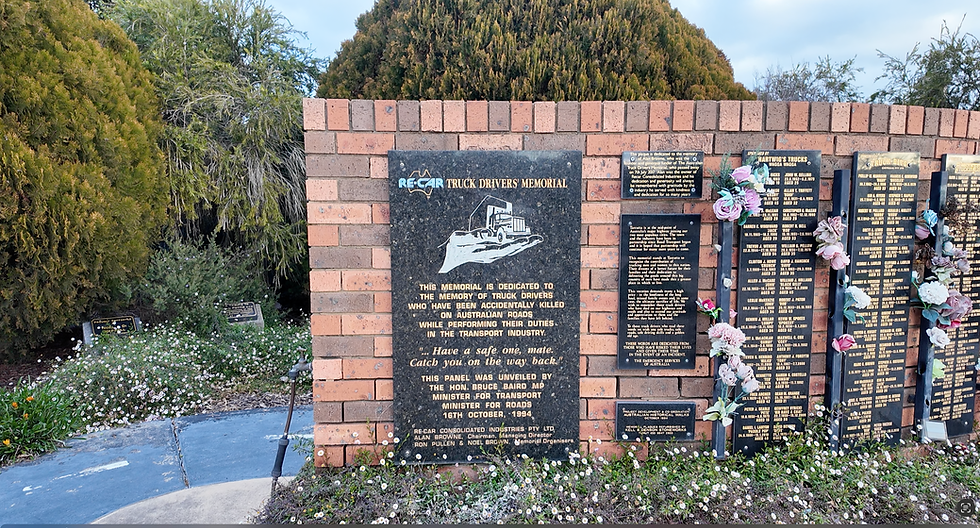
The need for grief literacy becomes even more urgent when a worker is killed, seriously injured or psychologically harmed through work.
Colleagues may have witnessed the incident, attempted a rescue, administered first aid or worked alongside the person for many years. Some may experience guilt because they survived, were absent that day or believe they should have done more. Others may become fearful about their own safety.
Families may then be required to navigate regulators, police, coronial processes, insurers, legal proceedings and media attention while grieving.
Safe Work Australia’s national principles for supporting families following an industrial death recognise that families should be treated with compassion, dignity and respect, and provided with clear and timely information.⁶
The workplace response also matters to the wider workforce. Silence, speculation or poorly handled communication can increase distress. A thoughtful response can help people feel that the life lost—and the impact upon those who remain—has not been reduced to an incident number.
Grief and psychosocial safety
Grief itself is not a workplace failure. Death, illness and loss are part of human life.
But the way a workplace responds can either reduce distress or add to it.
Low support, unmanageable workloads, poor organisational justice, role uncertainty and exposure to traumatic events are recognised workplace psychosocial hazards.⁷ These risks may interact and compound one another.
Workplace studies of psychological injury and trauma exposure consistently show increased risk of anxiety, depression and burnout when employees are exposed to high demands without adequate support.⁸
A grieving worker who returns to an unchanged workload, receives little support and fears being judged for reduced concentration may face several pressures at once. If the loss arose from a workplace incident, an adversarial investigation or compensation process may compound that harm further.
Psychological safety is not demonstrated by a poster in the staffroom or an employee assistance telephone number alone. It is revealed in what happens when someone becomes vulnerable.
Does the organisation make room for the human impact of loss? Or does it quietly communicate that grief is acceptable only while it remains invisible?
What meaningful workplace support looks like
There is no single response that will be right for every grieving person. Some employees want to return quickly because work provides routine, connection and stability. Others need more time away. Some want colleagues to acknowledge what happened; others prefer privacy.
The starting point is not assumption. It is a respectful conversation.
A supportive workplace can:
Make contact without creating pressure
A manager can acknowledge the loss, express care and ask how the employee would prefer to be contacted.
Offer flexibility beyond minimum leave
This may include additional paid or unpaid leave, flexible hours, working from home, a gradual return or reduced duties.
Review the workload
A person should not return to an overflowing inbox and be expected to immediately compensate for their absence.
Ask before sharing information
The employee should decide what colleagues are told and how the loss is described.
Remember that grief continues
Check-ins weeks or months later can be more meaningful than early formalities.
Prepare managers
Managers need grief literacy—not counselling skills. They need to listen, respond calmly and recognise when further support is required.
Provide choice in support
Employee assistance programs, peer support, culturally appropriate services and community supports may all be helpful.
Recognise different forms of loss
Grief is not limited to immediate family death. Other significant losses can be equally life-altering.
Small acts are not small to the person grieving
Workplaces sometimes hesitate because they believe meaningful support must involve a major program or a perfectly worded policy.
Often, it begins with ordinary human care.
“I am sorry.”
“Would you like us to tell the team?”
“What would make work more manageable this week?”
“We can revisit this arrangement when you are ready.”
These words do not remove grief. They tell the person they have not become a burden.
A test of organisational character
Most organisations say that their people matter. Grief is one of the moments in which employees discover whether that statement is true.
A workplace cannot prevent every loss. It can prevent isolation, unnecessary pressure and avoidable secondary harm.
The question is not whether grief belongs in the workplace. It is already there. The question is whether we are willing to see it—and whether, when work or life changes someone forever, we know how to stand beside them.
Because grief is not a failure to recover quickly enough.
It is the human response to losing someone or something that mattered.
Sources
Stroebe, M., Schut, H., & Stroebe, W. (2007). Health outcomes of bereavement. The Lancet, 370(9603), 1960–1973.
Lattanzi-Licht, M. (2017). Grief in the workplace: A review of employee functioning after bereavement. Journal of Workplace Behavioral Health.
Fair Work Ombudsman (Australia). Compassionate and bereavement leave.https://www.fairwork.gov.au/leave/compassionate-and-bereavement-leave
Aoun, S. et al. (2015). Bereavement support effectiveness and workplace impact. Palliative Medicine.
Chartered Institute of Personnel and Development (CIPD). (2020). Supporting employees through bereavement.
Safe Work Australia. National principles for supporting families following an industrial death.https://www.safeworkaustralia.gov.au/doc/national-principles-support-families-following-industrial-death
Safe Work Australia. Psychosocial hazards in the workplace. https://www.safeworkaustralia.gov.au/safety-topic/managing-health-and-safety/mental-health/psychosocial-hazards
Harvey, S. B. et al. (2017). Workplace stressors and mental health outcomes: A systematic review. Occupational Medicine.


Comments