
When someone is injured at work, how do we stay beside them?

Shattered explores stigma, recovery and the importance of staying connected.

When someone is injured at work, life can change overnight. Alongside treatment and recovery, there may be uncertainty about income, employment, relationships and the future.
How people respond after an injury can make a great deal of difference to someone’s recovery.
A community screening of Shattered brings employers, employees, families and neighbours together to understand these experiences, recognise stigma and consider how to offer support. Hosts do not need specialist knowledge of workplace injuries to begin this conversation.
Why we made Shattered
Shattered began with people telling us what happened after they were injured at work. Many described responses that added to their distress. We wanted to understand why people already facing injury were experiencing further hurt when they needed support.
We sought expert perspectives to help make sense of these experiences and explore a constructive path forward: understanding why our responses to someone needing support matter so deeply.
What began as a single documentary became a four-part series, placing contemporary experiences within a century of Australian workers’ compensation history.
Through our work with social historian Marj Prior, a former federal government communications leader with four decades of experience in social history, we came to appreciate the importance of recording personal experiences alongside official accounts. Legislation, reports and administrative records document decisions and institutional change. They do not always capture how people experienced those decisions, or what followed for their families.
Filming took us from rural communities to major cities. Among those interviewed are a nurse, a former criminal lawyer who experienced workplace injury, a disability worker, a former police officer, a public servant, a construction worker and rural workers. Alongside families, clinicians and employers, their accounts reveal how the effects of workplace injury extend beyond one person—to households, workplaces and the wider community. Together, their stories help us understand this history and why our responses to people experiencing injury, mental health challenges and distress matter.
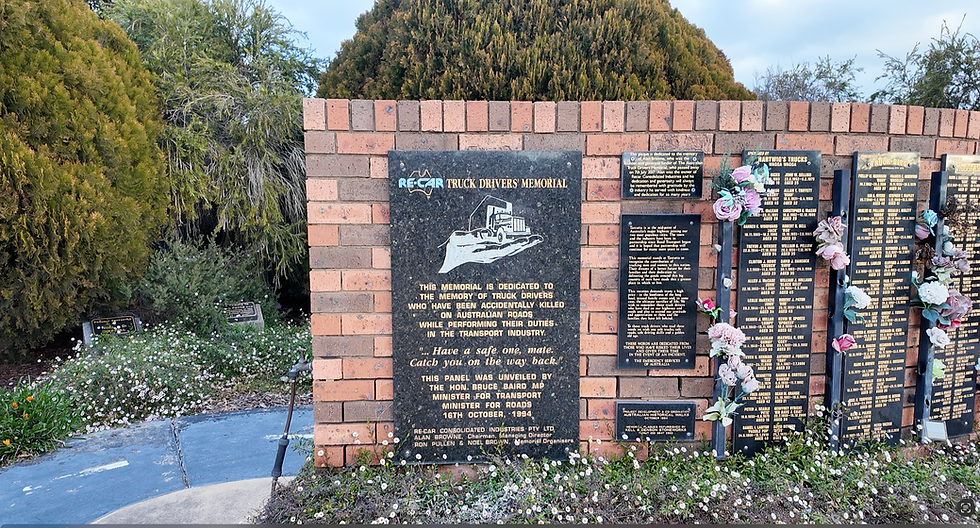
During filming, we also visited memorials around Australia honouring people who had died at work. These were solemn visits that deepened our understanding of the importance of remembrance and the enduring loss carried by families and communities. They strengthened our resolve to tell this history with care and dignity, recognising both those who have died and those living with the consequences of workplace injury.
The scale and wider community impact
In 2021–22, an estimated 497,300 Australians experienced a work-related injury or illness. Most continued working in the job where their injury occurred or had changed jobs, although employment does not necessarily mean complete recovery.
For people experiencing serious or lasting harm, the consequences can extend to families, workplaces and communities. How we respond matters beyond the individual: judging or excluding someone who needs support can send a message about whose contribution is valued and whether asking for help is acceptable.
Respectful communication, continued inclusion and appropriate support help affirm that a person’s worth does not diminish when their capacity changes.
Recognising stigma
Across the experiences shared with us, we recognised a pattern: people feeling disbelieved, losing connection or finding their integrity questioned after injury. Some described feeling unjustly punished for needing support.
Participants spoke about insensitive correspondence, administrative responses that overlooked human consequences, and tensions between the care their treating clinicians sought to provide and the requirements of managing their injury support.
Safe Work Australia identifies workers’ compensation stigma as negative stereotyping or discrimination against people seeking workers’ compensation. This includes gossip, bullying and harassment, as well as workplace structures and procedures that penalise injured or ill workers.[1]
Recognising stigma therefore means examining both everyday behaviour and how support is organised.
A Canadian review brought together 100 studies describing injured workers’ experiences. Fewer than half used the word “stigma”, although many described suspicion, blame, discrimination, mistrust and lack of support. The researchers found that established stigma theories helped explain these experiences.[2]
Naming the pattern is important to community understanding. It helps us recognise connections between experiences that might otherwise appear isolated and invites us to reconsider our own responses.
Where does stigma come from?
Why might someone who was a valued colleague find their character or credibility questioned after injury?
Research commissioned by Safe Work Australia explores explanations rooted in human group behaviour: judgements about who contributes, who can be trusted and who might be drawing unfairly on shared resources. One proposed evolutionary explanation is that these judgements helped groups assess cooperation and threats to survival.[4]
Applied to workplace injury, this offers a way to understand assumptions that someone is exaggerating their condition, not trying hard enough or placing an unfair burden on others. These assumptions can arise without a conscious intention to cause harm.
Power also matters. When people making these judgements control employment, opportunities or access to support, stereotypes can influence decisions with lasting consequences.[4]
These explanations do not excuse stigma or make it inevitable. Social attitudes change, and recognising an automatic judgement creates an opportunity to question it. Shattered invites that reflection: what changes in how we see someone when they become injured, and what assumptions might we make without realising it?
History shapes the present
NSW introduced compulsory workers’ compensation insurance and a dedicated commission in 1926, building on earlier legislation.[3] The scheme developed in an industrial era with very different understandings of mental health, disability and psychological harm. Our understanding has advanced considerably, but changing laws does not automatically remove stigma.
Personal accounts help us examine how attitudes and practices have changed, and where familiar assumptions remain. A person’s worth extends beyond their current capacity to work.
Why reducing stigma matters to business
Employers and employees have a shared interest in workplaces where people can report an injury and ask for help without fear of judgement.
Stigma can undermine that trust. Fear of being disbelieved may discourage reporting or help-seeking. Mistrust can damage relationships, while pressure to return before someone is ready can complicate recovery and a sustainable return to work.[4]
Addressing stigma gives organisations an opportunity to strengthen communication, support earlier reporting and maintain constructive relationships during recovery.
Broader research links supportive, inclusive and mentally healthy workplaces with benefits for wellbeing and organisational performance. Evidence connecting particular workplace injury stigma interventions with specific business outcomes remains limited.[4]
Shattered offers a starting point for employers and employees to examine these issues together.
Words and workplace culture matter
A reference number identifies a file. “Claimant” describes an administrative role. Neither describes the whole person whose health, livelihood and family life are affected.
Addressing people by name, explaining decisions clearly and including them in conversations can make communication more understandable and respectful. An injured person should not have to become an expert in administrative language to access support.
Mindframe’s Our words matter guidance encourages accurate, person-centred communication and avoidance of judgemental labels.[5] These principles are relevant to how we discuss mental health and psychological injury.
Workplace culture gives these principles meaning. Can someone ask for help without feeling judged? Is contact agreed with the injured person and respectful of their needs? Does support continue when recovery takes longer than expected?
Safe Work Australia’s guidance identifies roles for everyone: colleagues can listen and maintain contact; supervisors can model supportive behaviour; employers can provide clear processes, accessible information and support services.[6]
Care becomes meaningful through what we say and do. The shared aim is recovery and a safe, suitable and sustainable return to work, supported by appropriate care, realistic opportunities and continued connection.
Creating constructive conversations
Many participants describe the distress of feeling unsupported. One offers a revealing contrast: after previously being instructed to manage injured employees out of workplaces, she later experienced injury herself and received support from a caring employer. Her account opens a conversation about the difference an employer’s response can make.
When people feel disbelieved or excluded, they may seek others who understand. These connections can provide friendship, recognition and practical support. People also need opportunities to describe harm they have experienced or witnessed, ask questions and explore support. These conversations need reliable information, respectful boundaries and room for different perspectives. Personal experiences deserve to be heard, while factual claims need careful checking.
Compassion and accuracy can sit together. People can feel heard without everyone sharing the same experience, interpretation or opinion.
We encourage hosts to allow time for discussion after the screening, using the supplied guides. A facilitator or panel can help, but is optional. The aim is to connect what audiences have heard with practical ways to support people locally.
Why watch Shattered together?
Shattered’s storytelling approach was developed independently. We later identified support for this approach in research commissioned by Safe Work Australia, which recommends engaging stories and media to encourage perspective-taking, empathy and understanding.[4]
Through personal accounts, expert insight and historical context, the series creates opportunities for learning and reflection.
A screening gives audiences time to listen, question assumptions and discuss what support could look like locally. That might mean staying in touch, asking what help would be welcome, explaining a decision more clearly or continuing to include someone in everyday community life.
We can respect someone’s privacy and still offer kindness, inclusion and support.
Bring the conversation to your community
Community screenings allow discussion to continue alongside and beyond a documentary’s wider release.[7]
Community groups, chambers of commerce, service clubs, workplaces and other local organisations can host or sponsor a Shattered screening. Screening and discussion guides help hosts prepare, including guidance on sensitive content. Discussion is voluntary, and no one should feel expected to disclose personal experiences. We recommend Episode Two, Doctor Doctor, as a starting point for community screenings. It explores mental health, care and recovery after workplace injury, opening a conversation about how workplaces, families and communities can respond.
Optional facilitators and panels are arranged separately. Hosted screenings complement our planned personal streaming release in 2027.
Challenging stigma and encouraging greater understanding of psychosocial safety are central to Shattered’s purpose. The project was a finalist in the Leadership in Workplace Psychosocial Safety category of the 2026 WayAhead Mental Health Matters Awards.
Our hope is that greater understanding can help us respond with more care when work changes a life.
References
Safe Work Australia. Workers’ compensation stigma.
Popovic, M., Reynolds, L., Noël, C., Cooper, L. and Maranzan, K. A. Conceptualizing Stigma in the Injured Worker Literature: A Scoping Review. Published online 18 March 2025; Journal of Occupational Rehabilitation, 36, 43–56 (2026).
Safe Work Australia. History of workers’ compensation in NSW.
Casey, T. W., Hu, X., Lee, Q. Y. and Carden, C. (2021). Research on the causes and impact of stigma in workplaces, and approaches to creating positive workplace cultures that support return to work. Commissioned by Safe Work Australia.
Everymind, Mindframe. Our words matter: Guidelines for language use.
Safe Work Australia (2023). Taking action to reduce workers’ compensation stigma: guidance for workers, supervisors, and employers and HR.
Documentary Australia. Exploring Documentary Distribution and Pathways for Social Impact.
Australian Bureau of Statistics (2023). Work-related injuries, 2021–22. Released 15 February 2023.


Comments